Set the strategy and sequence for modernizing checkout across every paid product.
Modernizing checkout across cash, virtual currency, and an entire product catalog.
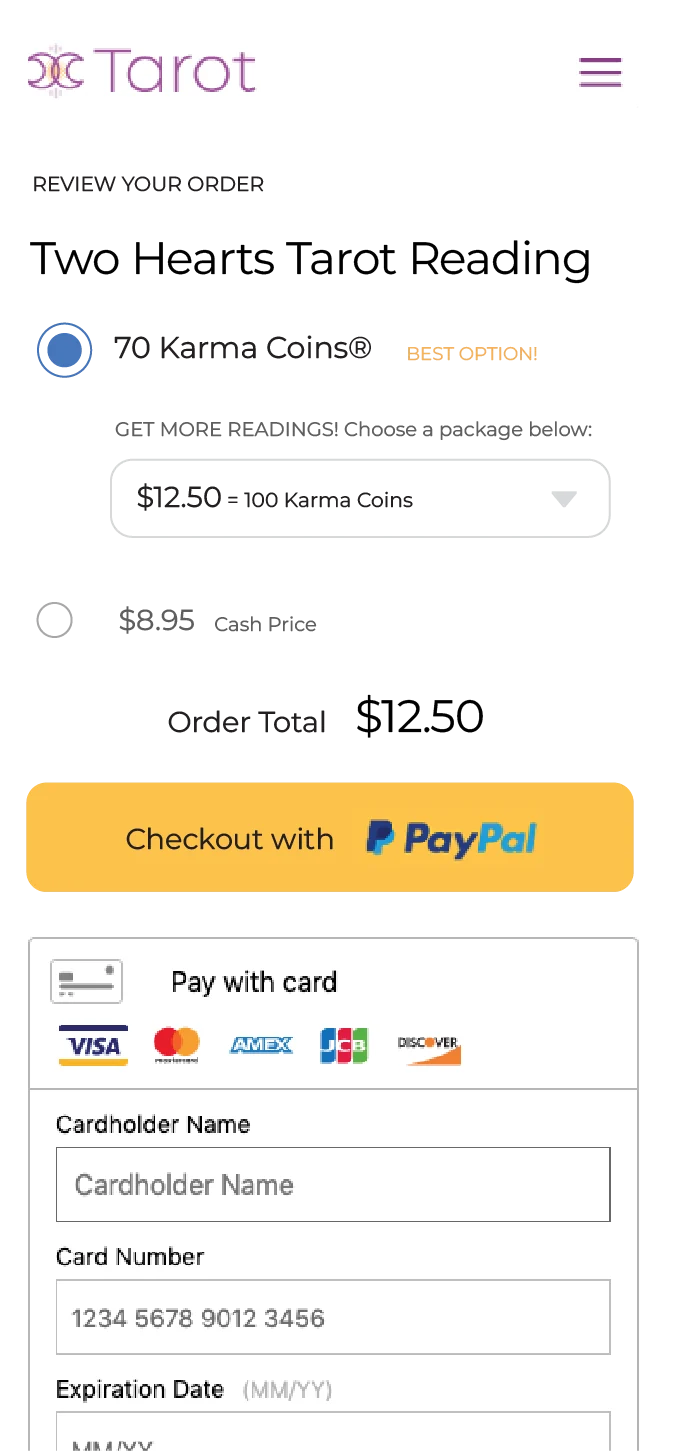
How I led the evolution of Tarot.com's desktop-oriented commerce system into a responsive, measurable platform—and built phased experimentation into the way checkout improved.
Business outcomes
27%Checkout conversion lift
47%Increase in average transaction value
62%Growth in cash sales
50+Digital commerce products migrated
Executive summary
I redesigned the commerce decision system behind every paid product—without interrupting live revenue.
Owned customer logic, experience direction, experimentation, prioritization, and phased adoption.
Connected cash, Karma Coins, balance, identity, payment, entitlement, and fulfillment states.
Improved the system while protecting transaction accuracy, customer access, and live revenue.

20 Karma Coins
Daily Reflection Tarot Reading

75 Karma Coins
Celtic Cross Tarot Reading

75 Karma Coins
Love Celtic Cross Tarot Reading

75 Karma Coins
Heartbreak Tarot Reading
45 Karma Coins
Yes or No Tarot Reading

170 Karma Coins
Ultimate Personality Report

170 Karma Coins
Ultimate Love Report

170 Karma Coins
Birth Chart
Reading
The core product logic
The best path depended on the customer's balance.
Every customer saw a path shaped by their balance, purchase history, VIP status, and the product itself—not the same default sequence for everyone. That's what the balance check was really deciding.
Purchase intentCustomer chooses to
unlock their reading
unlock their reading
Balance checkEnough Karma Coins?
Fulfill automatically
The system deducts the Karma Coins in the background and opens the purchased reading—no checkout required.
Reading revealedNoAdditional payment required Payment confirmed
Choose a payment path
Fulfill purchase
Reading revealedConversion experimentation
We tested checkout clarity first, then introduced promotional incentives.
We first compared how customers evaluated Karma Coin packages without changing the selected reading or payment mechanics. Once the checkout structure was established, we tested whether a time-bound offer changed purchase behavior.
Baseline
Simplify package selection
Show one Karma Coin package at a time to reduce visible complexity.
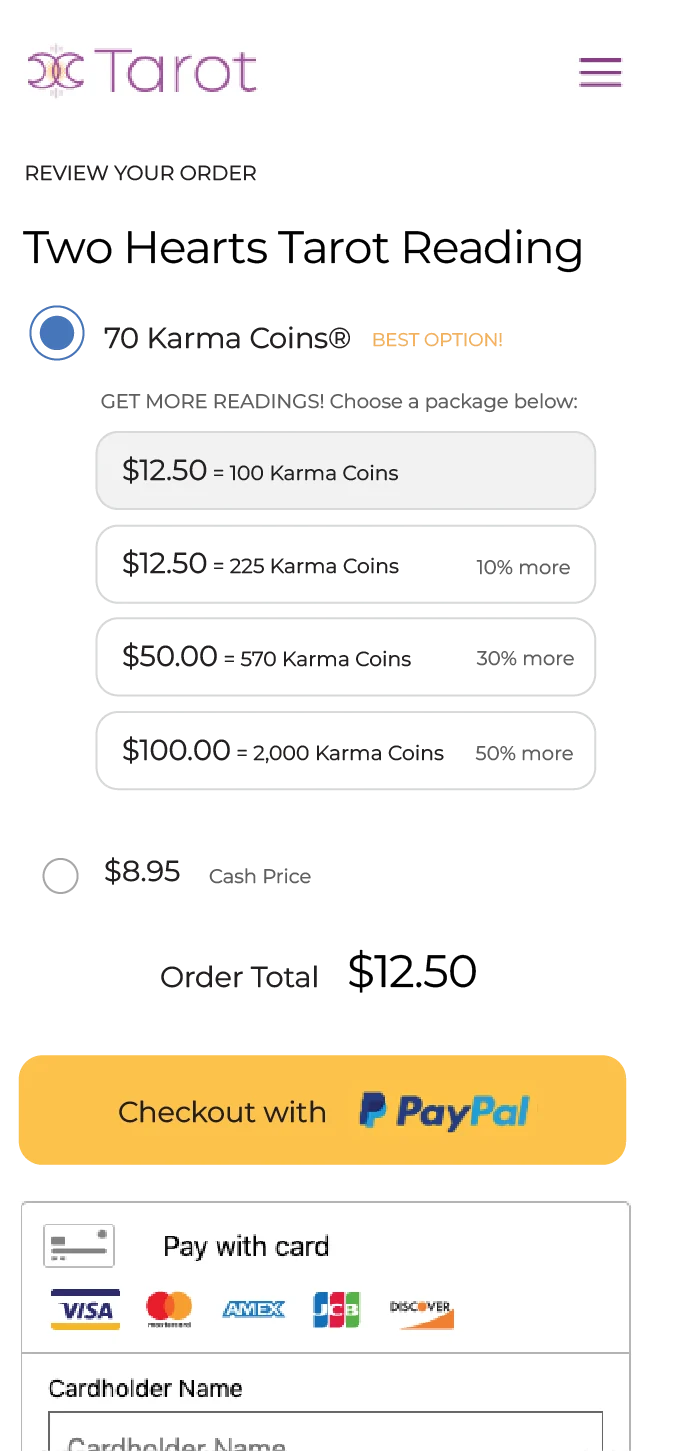
Checkout comparison
Make value easier to compare
Display every package together so customers could compare price and value.
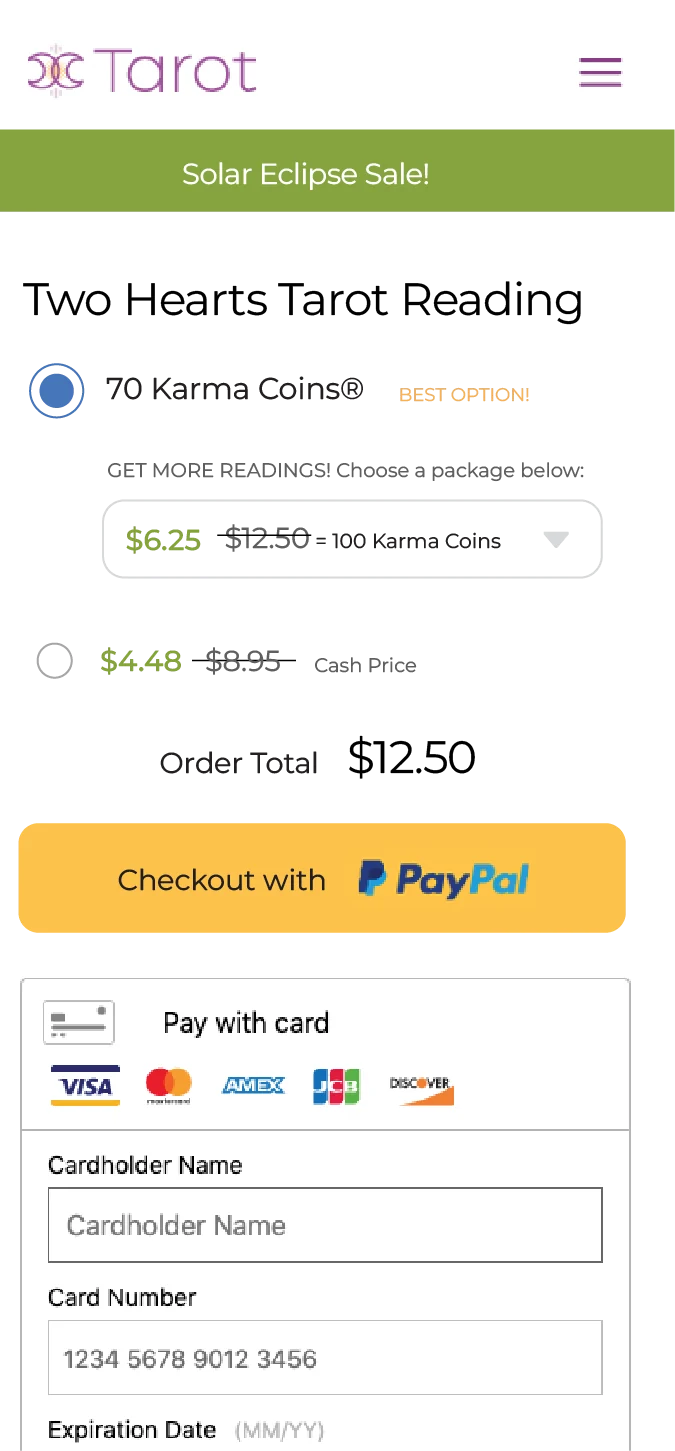
Promotion test
Test promotional response
Add a time-bound offer after establishing the checkout structure.
Marketing activation system
The checkout became a self-serve growth platform.
Marketing moved from engineering tickets to same-day targeted promotions. Every idea used to compete for roadmap capacity now launches the moment it's ready.
Engineering-dependent
- Marketing request
- Engineering ticket
- Backlog prioritization
- Delayed launch
Marketing configured it directly
- Define the offer
ProductCurrencyDiscount
- Select the audience
PurchaserVIP statusLifetime spendProduct affinityAccount age
- Same day launch. No engineering ticket.
Scaling methodology
We turned controlled rollout into a repeatable experimentation capability.
New checkout experiences moved from one product to the broader portfolio only after customer behavior, commercial performance, and operational reliability were validated.
One productFull portfolio
Release narrowly
Start with one product or a controlled cohort with meaningful volume.
Measure behavior
Track conversion, payment path, customer state, price response, and failures.
Compare safely
Evaluate the new flow against the control and operational guardrails.
Scale the learning
Extend validated improvements across the paid-product portfolio.
Guardrails held constant
Revenue continuityPayment successFulfillment accuracyError rate
What I learned
The strongest monetization systems protect the customer’s momentum while making the path to purchase feel effortless.